Introducing: New Wolves

Introducing
New Wolves
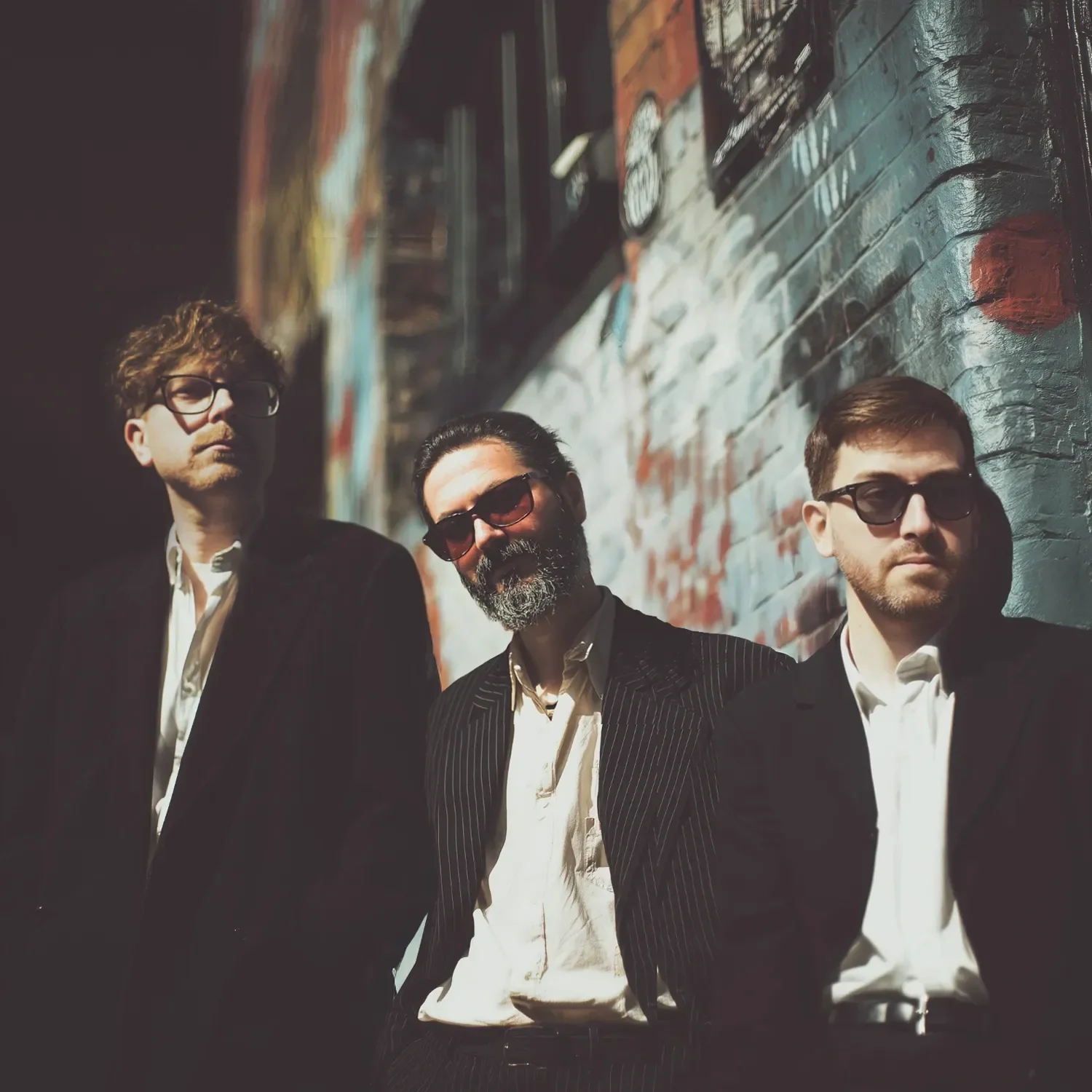
There’s something quietly absorbing about NEW WOLVES. The Swansea trio craft cinematic guitar music that unfolds patiently, sitting somewhere between atmosphere and melody. Their sound leans into space, texture and restraint — guitars blur into tone, synths and rhythm create drift and subtle momentum, vocals sit layered, reinforcing mood creating immersive, unforced music that invites the listener to lean in.
Made up of Steve Jenkins (guitar and vocals), Julian Hyland (keyboard, guitar and vocals) and David Thomas (drums), the trio favour observation over explanation, allowing songs to linger rather than resolve them. With a run of singles leading toward a full album in 2026 — including the newly released Boiling Up — the band continue to refine a sound defined by patience, atmosphere and quiet confidence.
How would you describe your sound to someone hearing you for the first time?
”Usually involves the word ‘wonky’ in there somewhere, but we tend to stick with acoustic guitar/synth, even if that's not quite on the button with our newer stuff which has a bit less synth and more acoustic instruments. Let's go with alt-folk, which is probably 65% there.”
When did this project start to feel like something substantial
”We've had some great moments so far, but I’m not sure I’d describe it quite like that yet. Once we’ve got a solid live fanbase, played the festivals, got a few albums out, etc then I’ll get back to you.”
Which track in your current catalogue feels most like a statement of intent, and why?
”I think our new track ‘Boiling up’ feels like a statement of some kind. It feels like our first ‘proper track’ in some ways, rather than a bedroom recording mixed well, like our past tracks maybe are. It has a fresher sound, and doesn't rely on synths to boost lesser parts of the song. We’ve taken longer to complete it rather than rushing it out with weak spots.”
What usually comes first for you: lyrics, melody, rhythm, or atmosphere?
”Chords usually. I settle down with the acoustic guitar and try and find a good starting chord that I haven't used much recently and then a melody line will start up in my head, a few notes. I can sort of imagine the rest of the song from there and have to piece it together with my non-existent theory knowledge i.e. by trying multiple chords underneath the melody. Recording it on my phone and then listening back later to find out if iit'sa stinker or not.”
Do you find themes returning in writing process, even unintentionally?
”Yes, lyrically when I’m getting the first guitar/singing idea down it tends to be stream of consciousness nonsense, mixed in with lots of weather and religion themes. I'm not sure why as I’m not that into either, but it tends to be God this, Fog that. I leave a few in but don't want to accidentally turn into a Christian Rock band so mostly swap them out.”
How has your environment—your city, scene, or isolation—shaped your sound?
”It does to some extent, there’s a good tradition of folk and psychedelic rock around these parts which we sometimes tap into. Geographically, we sort of in between the foothills, suburbs and the coast which maybe gives us a less intense, thoughtful sound.”
What role does collaboration play in your creative process?
”We’re a band so we do write together sometimes, this usually happens after a few drinks during a band practice. They tend to be 25 minutes of the same verse/riff repeated, but some great stuff comes out, even if it takes hours to make sense of it.”
What’s something that didn’t work early on but helped define who you are now?
”We don't have a bassist. Our friend who has played bass with us previously was busy with other bands so we thought we’d use samples instead of getting someone in. Let'sjust say, this took a while to get used to, but I think it gives us an individual live sound.”
What does your live show offer that listeners won’t get from the recordings?
”Glaring errors. i.e. it's a bit less ‘controlled’. We play a bit more loosely and maybe have more loud/quiet dynamics than the recordings. Still pretty understated though, don't expect us to magically turn into AC/DC or something.”
What’s the most valuable lesson you’ve learned from playing shows so far?
”Practice, practice, practice, especially as we have a robot bassist.”
Which artist, album, or moment changed how you think about making music?
”Lots that could be mentioned here, but the first thing that springs to mind is when I read how Bon Iver wrote lyrics that fit his melodies rather than crowbarring some poetry into a line and messing up the flow of the vocal line. This can mean lyrics that skirt close to gobbledegook.”
How do you know when a song is finished—or do you ever?
”I guess these days it's when they’re sent out to the streaming services, can't change them then. Which is good really as I’m a tweaker.”
What do you hope people take away after spending time with your music?
”If they feel like they spent a bit of time with us, in our world for a few minutes, then that would be nice.”