Introducing: Special Friend
Introducing:
Special Friend
French/American duo Special Friend have built a reputation for crafting elegant, intricate indie pop while staying firmly rooted in their DIY beginnings. Guillaume Siracusa (guitar, vocals) and Erica Ashleson (drums, vocals) may be just two people, but their music often feels far bigger — a mesh of jagged guitars, driving rhythms and crystalline vocal melodies that lock together with striking precision.
Recorded in rural isolation in 2025 and mixed by Syd Kemp new album Clipping finds the pair expanding their sound without losing that immediacy, released jointly between Skep Wax Records, Howlin’ Banana Records & Hidden Bay Records. The record moves from the bright indie pop rush of “Breakfast” to the dreamy, expansive textures with the albums title track, while songs like “Isolation” lean into a softer, homesick melancholy. Elsewhere, krautrock experimentation and slowcore atmospheres add new colours to the mix.
We caught up with the duo to talk about the album, their evolving sound, and the creative freedom of being a band of two.
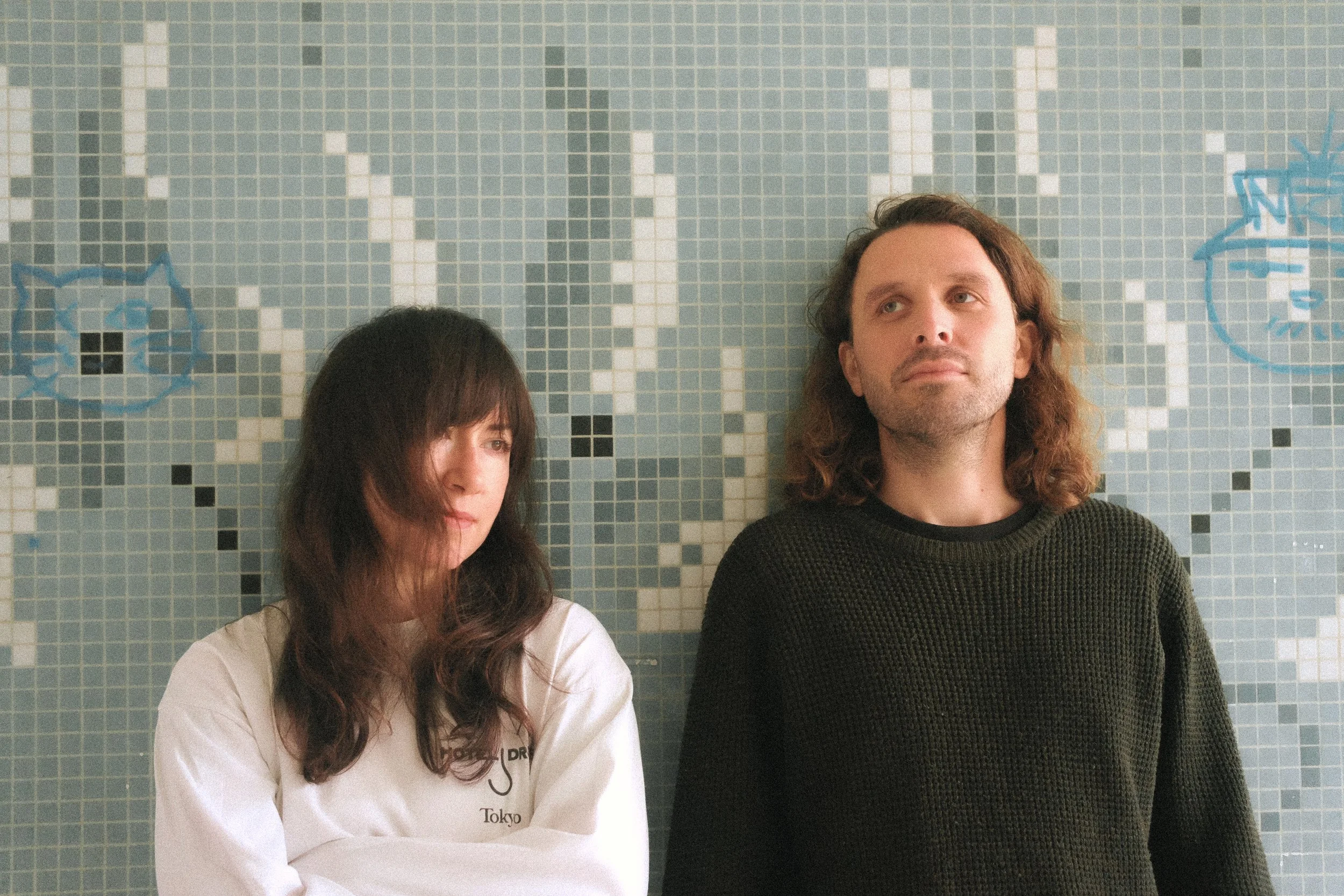
Photo credit: Jules Vandales
How would you describe your sound to someone hearing you for the first time?
Guillaume: “Indie pop, quiet and noisy with a minimalistic naive emotional approach"“.
Erica: “Noisey indie pop with sporadic tempos and harmonic vocals”.
When did this project start to feel like something substantial?
Guillaume: “Right from the beginning, I would say. We jammed with no intention while Erica was just beginning to learn drums, immediately creating atmosphere that we found intriguing. We decided to start the project soon after to see what could come out of it and quickly wrote our first songs which would become our 1st EP in 2018”.
Erica: “Same, I would say around the time we starting playing our first gigs and recording our first EP which came out end of September 2018”.
Which track in your current catalogue feels most like a statement of intent, and why?
Guillaume: “None, we create what we feel right in the moment, we don’t know what we’ll do next”.
Erica: “I would say “Clipping”, which shares the title of the album, though the song title came first. I feel like it’s very representative of what Special Friend is, while sometimes we delve into different atmospheres in our other songs”.
What usually comes first for you: lyrics, melody, rhythm, or atmosphere?
Guillaume: “Melody, rhythm and atmosphere at the same time. We usually jam together to find ideas for songs, it needs to have these three ingredients to catch our interest to start working on it to make a song. Lyrics often come after but sometimes random words or phrases that we sing when jamming make their way through the final lyrics, sometimes the lyrics are even built around them”.
Erica: “All of what Guillaume said above. We sometimes come back and revisit some structural or small arrangements later during the recording process”.
Do you find themes returning in writing process, even unintentionally?
Guillaume: “Sometimes yes, we have our obsessions and habits but we also like to change from goofy wacky to more deep and emotionally driven lyrics. Erica writes most of them”.
Erica: “Most of my song lyrics are quite abstract, I like to do a bit of storytelling that’s generally quite melocholic but sometimes try to keep things fun. The passing of time, change, evolution as a human in the universe, observation, are all very recurrent themes”.
How has your environment—your city, scene, or isolation—shaped your sound?
Guillaume: “I guess since the indie scene in Paris is small and not particularly popular we don’t get unintentionally caught in trends too much, we don’t have to bother with audience expectation either, we pretty much feel free to do whatever we like”.
Erica: “I don’t feel influenced by others around us, but we naturally gravitate around scenes and friend’s who are into the same sort of music, which hasn’t changed much in the past few years. But could still evolve as time goes on. We are also getting closer to the UK scene, thanks to our UK label Skep Wax”.
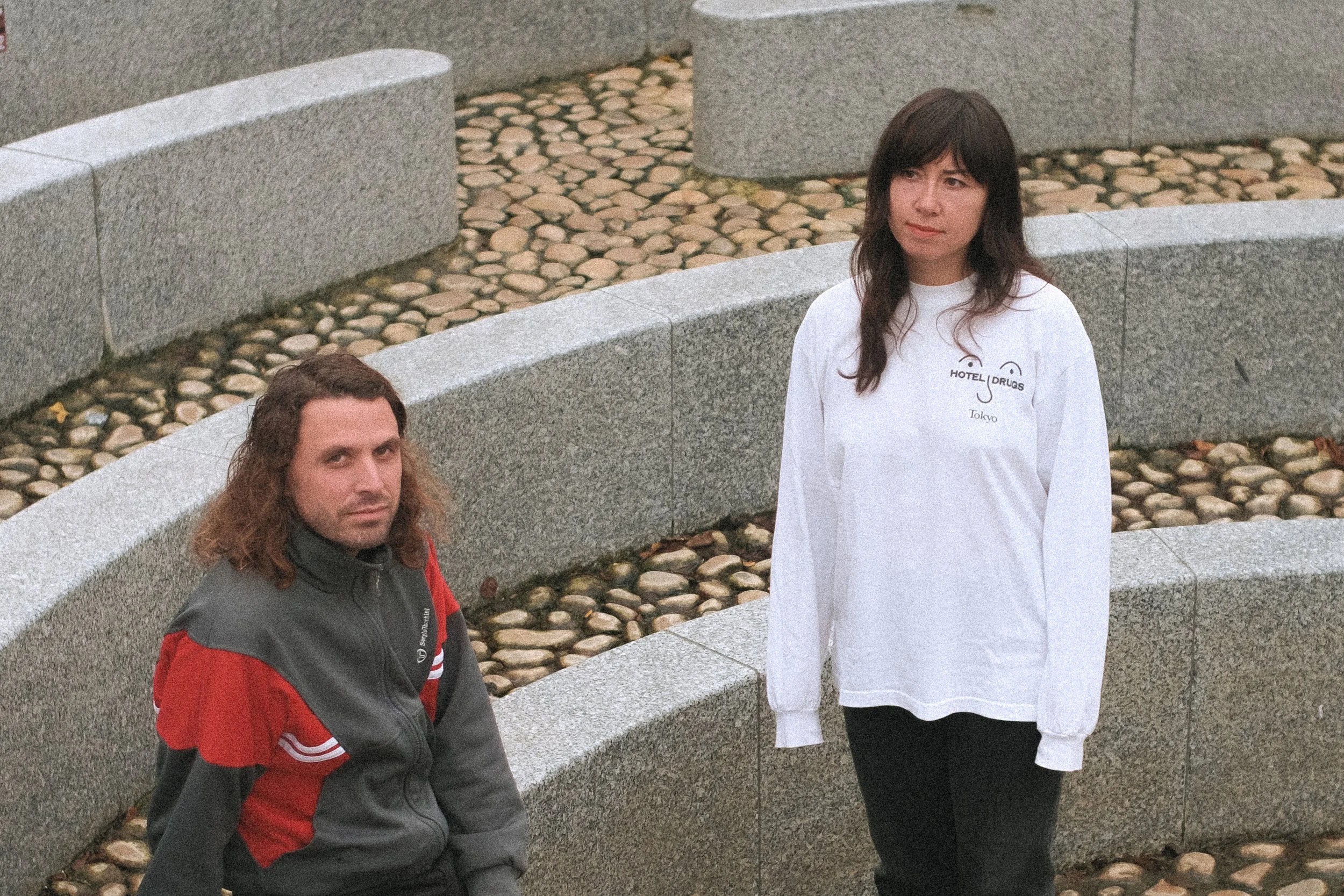
Photo credit: Jules Vandales
What role does collaboration play in your creative process?
Guillaume: “Very important. Obviously we each have some aspects of the project in which we are more involved like maybe arrangements and production for me and lyrics, artwork and visuals for Erica but we value the opinion of the other and in the end we make most of the decisions together”.
Erica: “We both work well together and even collaborating with the sound engineers during the recording, mixing and mastering process are also very essential in putting out the best record possible”.
What’s something that didn’t work early on but helped define who you are now?
Erica: “For the longest time we’ve thought about having a bassist, or a third member, we still compose and record just the 2 of us, but we have welcomed the idea of occasionally having a third musician join us for live performances, which sometimes creates a different sound on stage, it’s nice to have that as an option but also being strong enough to play still just the 2 of us”.
What does your live show offer that listeners won’t get from the recordings?
Guillaume: “A more direct access to the raw spontaneous quality of our songs. And some mistakes too”.
Erica: “Louder, sometimes faster depending on how much sleep we got, visual performance (seeing Guillaume loop his guitar on stage and me playing with my eyes closed)”.
What’s the most valuable lesson you’ve learned from playing shows so far?
Guillaume: “Mistakes don’t really matter, they often don’t get in the way of the feelings, the emotion of the music”.
Erica: “That most times it’s sounds better in the audience side than ours, even if we feel like it sounded terrible on stage, apparently the audience gets a better sound!”.
Which artist, album, or moment changed how you think about making music?
Guillaume: “Lots and lots, it’s hard to pick one. Sometimes coming back to an album that i’ve loved in the past and hearing it with a new perspective can change the way I think about making music. It’s constantly evolving.
For example, my father had a cassette of early The Cure albums, i loved it as a kid because the sound and the atmosphere felt out of this world. I realised much later, coming back to it (specifically the album “Seventeen seconds") that it had a lot to do with their use of minimalism, space, radical esthetical choices in the sounds, recording and production. And since i listened to it through an old worn out cassette as a kid, i guess it was my introduction to lo-fi recording as well. But it’s just an example, i’m not even so familiar with The Cure’s later works. I could cite so many other and for different reasons, like Yo la Tengo “And then nothing turned itself inside-out”
Erica: “Playing in Special Friend was my first experience composing in a band, prior to that I was just a huge music fan and playing in this band changed my whole perspective on music, how to compose and create, and it has been the most creative liberating feat of my life which allowed me to also try making music in other projects with other musicians as well”.
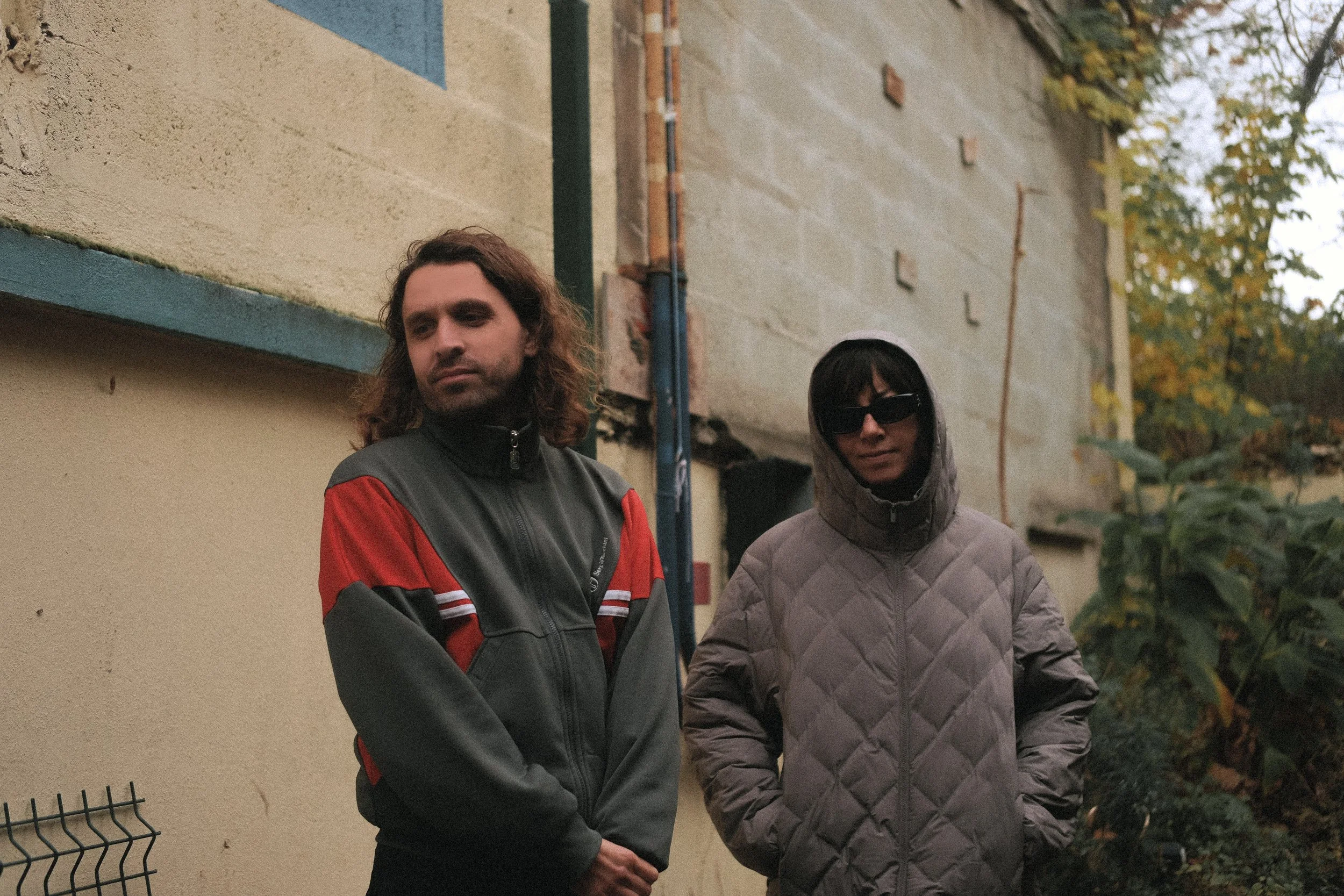
Photo credit: Jules Vandales
How do you know when a song is finished—or do you ever?
Guillaume: “It’s hard to say and it really depends. Working too long on a song can become counter productive at some point. We like to preserve some of the spontaneous aspects of our music, sometimes we let go of songs or ideas if you feel stuck”.
Erica: “I can be impatient, so generally when it feels “good enough” but we’re always open to adapting and revisiting some songs”.
What do you hope people take away after spending time with your music?
Guillaume: “Emotional connection to the music I guess”.
Erica: “I hope they feel something, anything, or just have a good time listening”.
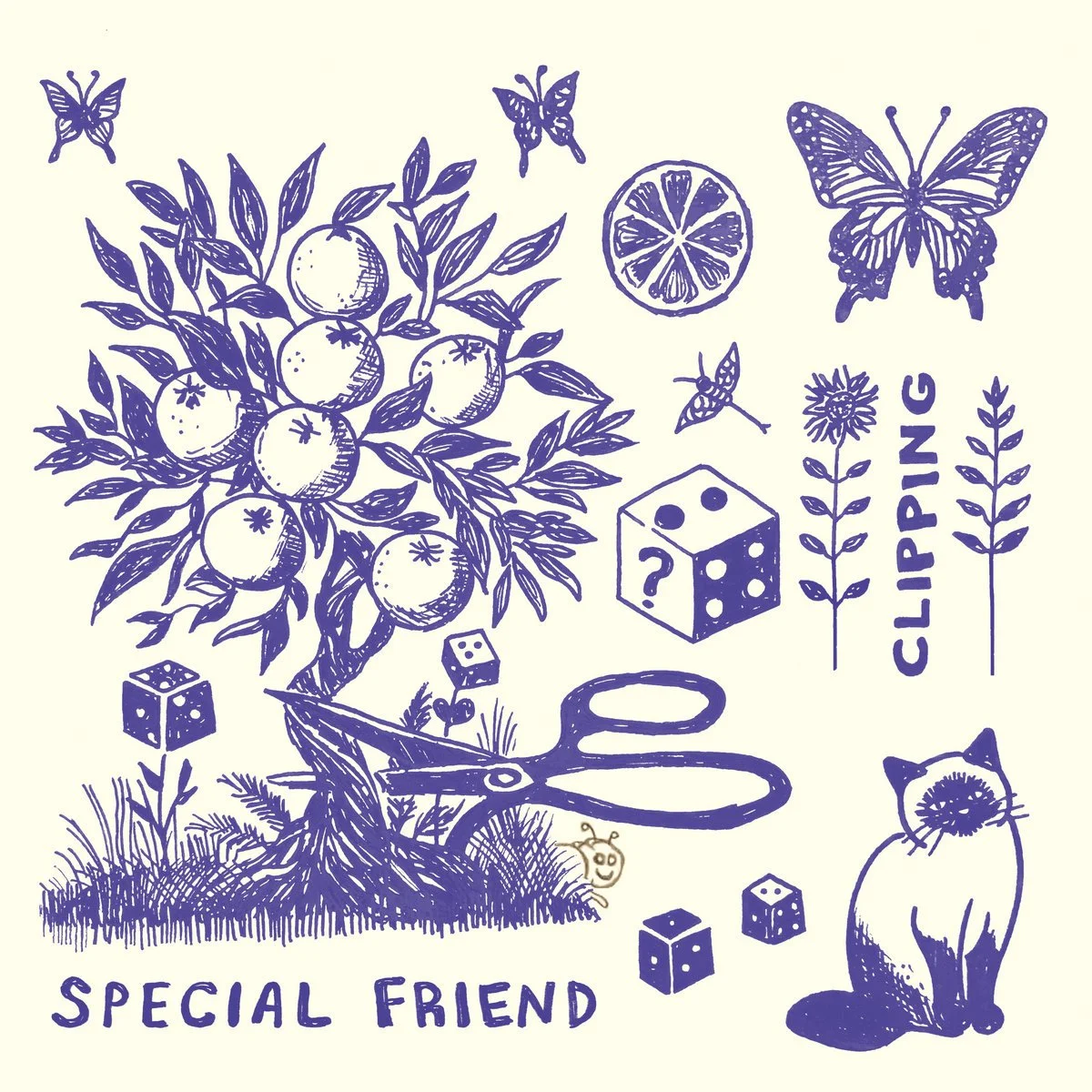
Clipping is available now via Skep Wax Records, Howlin’ Banana Records & Hidden Bay Records purchase here: