Introducing: Hannah Lou Larsen
Introducing:
Hannah Lou Larsen
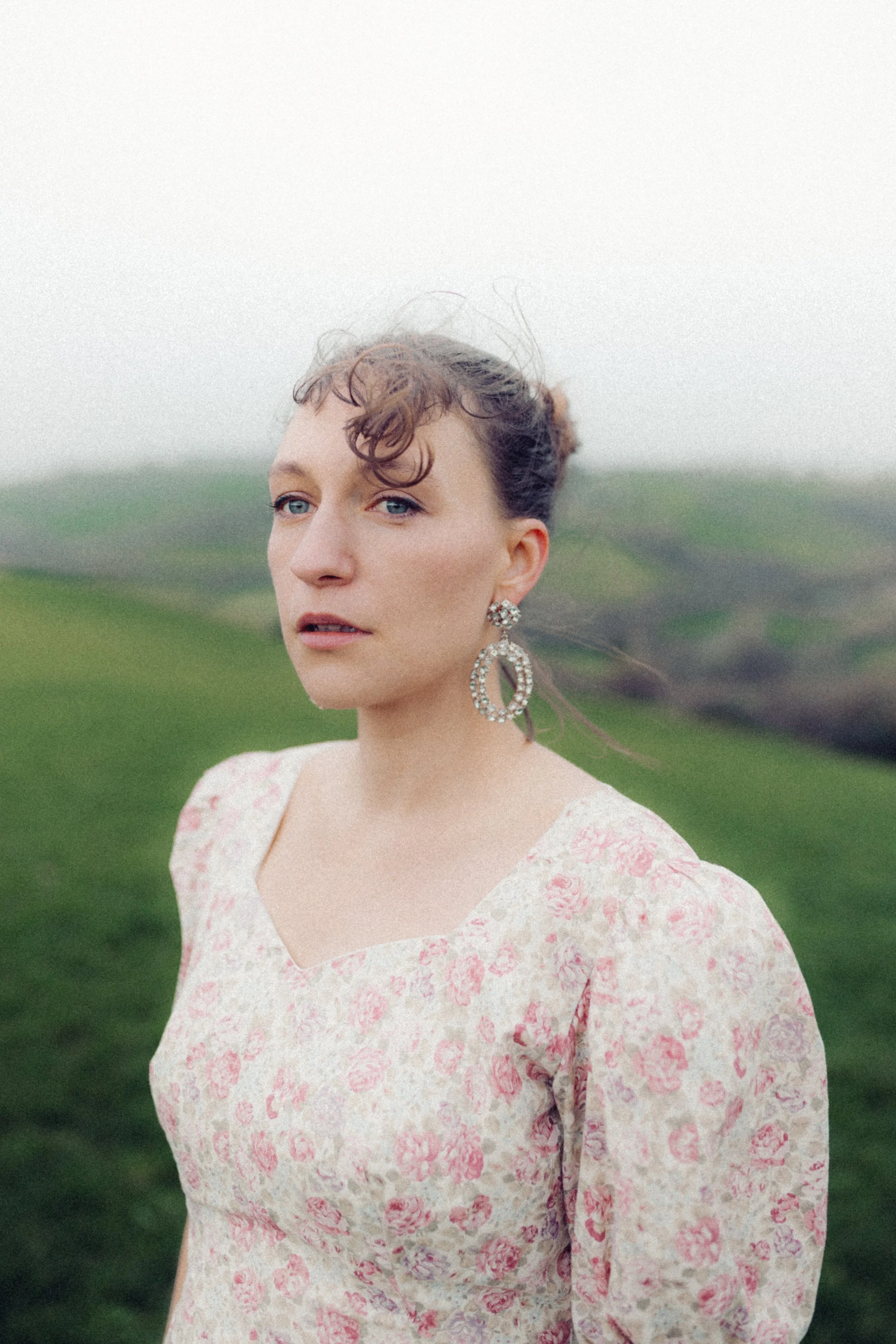
Photo Credit: Phil Jones
Now based in Oxford, Danish multi-instrumentalist and producer Hannah Lou Larsen creates music that feels at once intimate and expansive, blending craft-folk textures with electronic beats, layered harmonies, and found sounds. Her newly released four-track EP Peach Pine Ocean marks a defining moment — a work that signals both artistic clarity and quiet confidence.
Previously recording under the moniker Asthmatic Harp while living in Glasgow, Larsen now emerges under her own name with renewed purpose. The transition reflects an artist stepping fully into her identity, guided by intention, curiosity, and a distinctly self-assured creative vision.
We follow the path that’s brought her to this point, diving into the influences, landscapes, and lived experiences that have shaped her perspective — and still help define a sound that’s unmistakably her own.
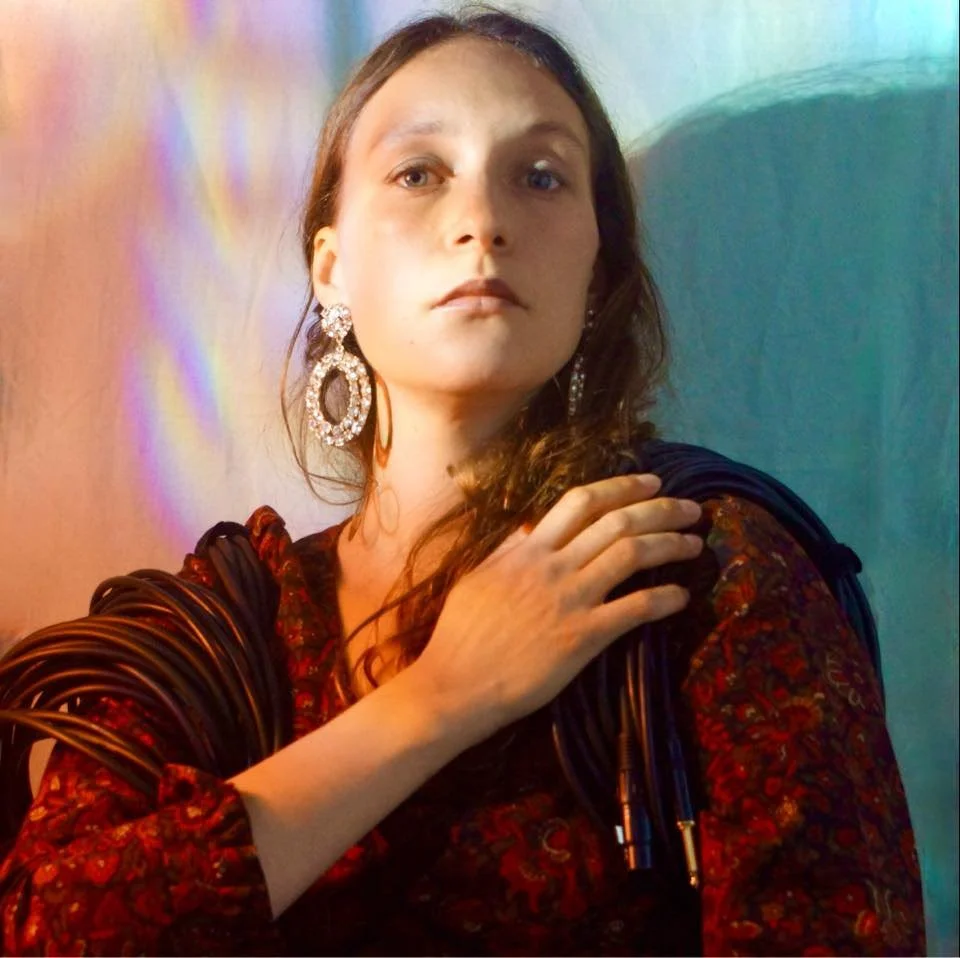
How would you describe your sound to someone hearing you for the first time?
“Imagine Sylvan Esso taking an afternoon tandem bike ride into Björk’s sonic landscapes. In short, Electro-infused art pop with a Scandinavian folk heart.”
When did this project start to feel like something substantial
“After several years releasing music under the pseudonym Asthmatic Harp, a name partly inspired by my love of anything Asthmatic Kitty records spat out, partly by my little brother's asthmatic breathing, fused with the sound of my beloved autoharp, something in my writing had started to shift. I felt like my songs and sounds were taking a more personal and unashamedly direct turn that only felt right to honour with a shift towards releasing music in my own name, Hannah Lou Larsen. The first single, Buddha on a Shelf, came out in late 2023, and I’ve just released my debut EP, Peach Pine Ocean (Feb 7, 2026). So now is a really good time to join my music community, because it feels like we’re right on the brink of something about to take flight”
Do you find themes returning in writing process, even unintentionally?
“I’ve recently realised how many of my songs are about friendship in one way or another. From the more fleeting encounters to the heart ache and loss felt when you grow apart from someone that you thought you’d go through life with, to the friends that stay around and become your life witnesses. Peach Pine Ocean, my new EP is all about the ever changing nature of human connection and how all these marks, scars and sounds shape us, as we move through life.”
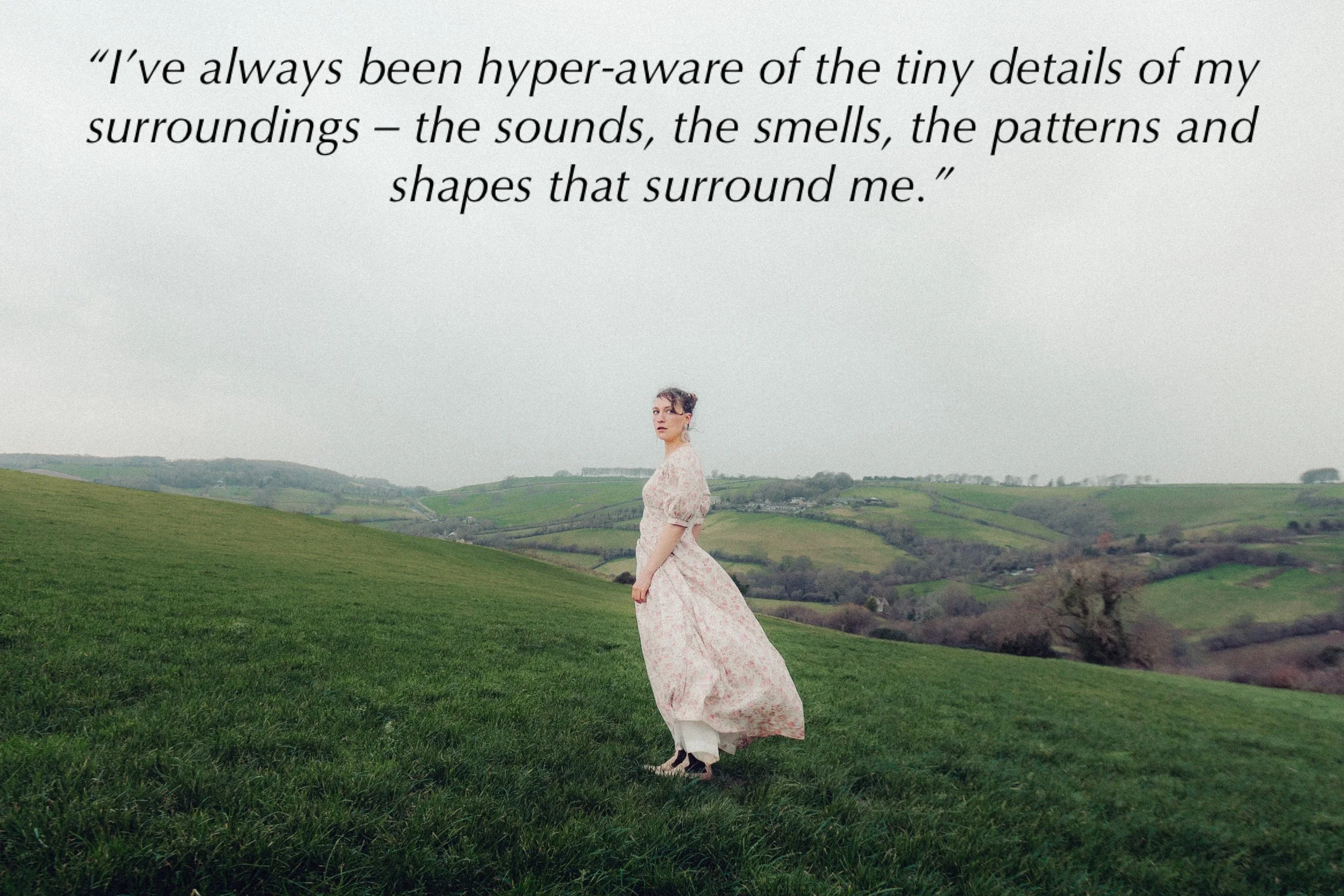
Photo Credit: Phil Jones
How has your environment—your city, scene, or isolation—shaped your sound?
“I’ve always been hyper-aware of the tiny details of my surroundings – the sounds, the smells, the patterns and shapes that surround me. As a child I used to collect tiny objects and found treasures in a shoebox, and I would record the sounds of my everyday environment: my brother’s asthmatic breathing, the sound of a hairdryer, the creak of our squeaky floorboards in my childhood home. This is how I made sense of the bigger picture, I think. It’s still how I make sense of my world now, and this shapes my music. I think there is a huge richness in being a permeable being, a porous creature who is open to the world. And if you know your values and are grounded in something good, something sustainable, I like to think that this openness is my rebellious act against a world of AI, and profit-driven markets: to insist on being soft, on being a human in community with the world around me. This is how my sound has been shaped by the ebb and flow of the North Sea, the melodies of my dad’s humming in the morning as he opened the windows and how my voice feels like a continuous translation of every experience that moves through me.”
What role does collaboration play in your creative process?
“I’m hugely influenced by and owe a lot to all the different musicians that I’ve been lucky enough to work with over the course of my career. There is so much to learn from artists shaped by different traditions to your own, and as much as it can sometimes cause confusion in the rehearsal room and take a bit of adjustment in terms of finding a common language to work from, whether that is using written notation when you’re not used to it, relying on your ears or adjusting in some other way, I feel so grateful to have had the chance to collaborate with other creatives who have all taught me that there is never just one way to go about things. Sometimes collaboration feels easy, sometimes it's harder but it always teaches you something. One of my favourite collaborations I ever did was the Missed Connections album, a conceptual, collaborative songwriting project with songwriter Olivia Rafferty, inspired by Craigslist Classifieds. For each song, one person wrote the lyrics and the other wrote the melody and we did two songs a week until we reached a 14-track album. I dream that we’ll one day turn the demos into a record and make a tour of it.”
What’s the most valuable lesson you’ve learned from playing shows so far?
“My most valuable lesson from playing shows so far has been that, regardless of the size or mood of the audience, whether it’s big or small, or if you have an attentive crowd or a group of people attached to their phones (or pint glasses), it’s always worth it for the one person who is there to connect with your songs. That space is sacred. Musical encounters change lives. That feels bigger than me and I’m here for that.”
Which artist, album, or moment changed how you think about making music?
“I will never forget watching PJ Harvey play her album Hope Six Demolition Project at Roskilde Festival, Denmark, with a full live band, the summer before I moved to the UK from Denmark for good. There were marching drums, horns and so much collective energy, the unison singing, the howling and the blue-rock anthems really made an impact on me. In fact, the song 'Near the Memorials to Vietnam and Lincoln' inspired the title for my own song 'Memorials', the final track on my latest EP Peach Pine Ocean. I can't quite explain why, but ever since that day I carried that title with me as one that I would one day be using for a song. It was also the day I decided that I wanted to learn to play the clarinet and it was the day that I realised that I had committed myself to a life of music whatever that may bring.”
How do you know when a song is finished—or do you ever?
“I don’t really see it like that anymore. I trust my ears and follow my intuition to judge when a song has found a home in one departure point – for instance, as a finished record. But later, when I start playing it live, it may again take many more departure points and find new homes in new versions. So I don’t worry too much about whether something is finished or not; I suppose if a song is good, it’s never really finished. It lives and breathes with the people it is experienced by, or played by.”
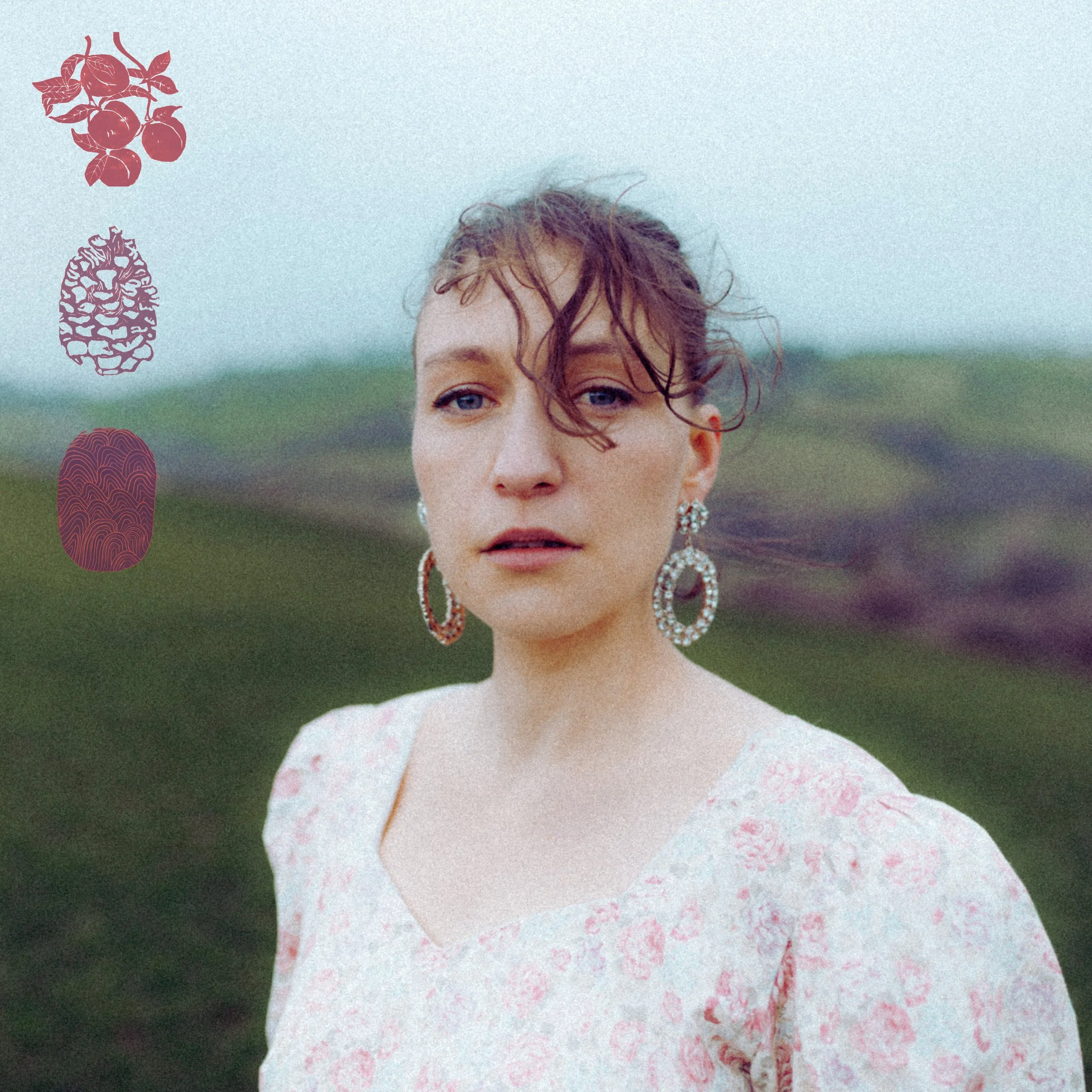
Peach Pine Ocean is available via Bandcamp.